


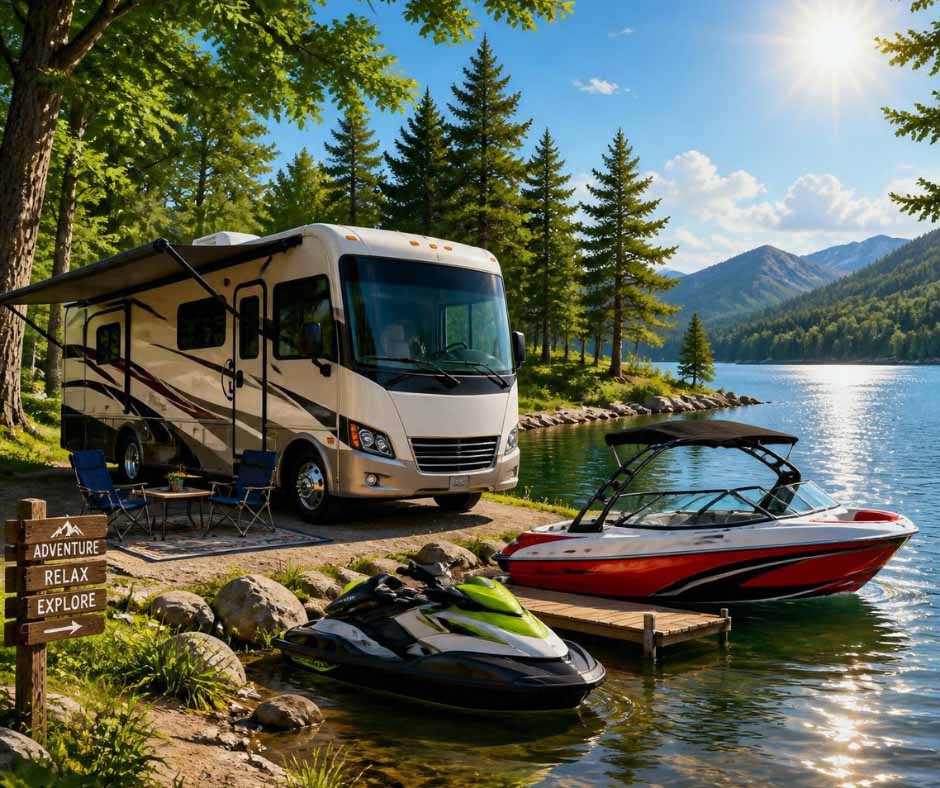
As autumn approaches and temperatures begin to cool, the seasonal outdoor recreation window draws to a close. Whether you spend your weekends cruising the open highway on a motorcycle, spending days on the water, or camping in an RV, taking time to properly prepare and store your recreational equipment preserves its performance and overall value.
Failing to winterize seasonal toys can lead to costly repairs come spring—ranging from cracked engine blocks caused by trapped water to dead batteries and pest infestations.
Here is a practical guide to winterizing and storing your RV, boat, and motorcycles before winter weather settles in.
Complete System Flush and Winterization
Trapped moisture is the single biggest threat to boats and RVs during sub-freezing winter weather. When water freezes, it expands, causing pipes, valves, and engine blocks to crack under pressure.
- Boats: Drain all cooling systems, water tanks, and live wells. Run marine-grade non-toxic antifreeze through the engine’s cooling system to safeguard internal components against freezing conditions.
- RVs: Drain the freshwater tank, grey water tank, and black water tank completely. Bypass the water heater and pump RV-rated non-toxic antifreeze through the freshwater plumbing lines until it flows through every faucet and shower head.
- Fuel Systems (All Vehicles): Add a quality fuel stabilizer to the gas tank and run the engine for 5–10 minutes to distribute the stabilized fuel through the lines and injectors. This prevents fuel degradation and varnish buildup in the fuel system over months of inactivity.
Battery Care and Electrical Maintenance
Batteries left connected during long storage periods naturally discharge over time. In cold temperatures, a discharged battery can freeze, swell, and rupture, ruining the unit entirely.
- Disconnect or Remove: Disconnect the negative terminal to eliminate small parasitic electrical draws. If storing equipment in freezing environments, remove batteries entirely and store them on a wooden shelf in a climate-controlled space.
- Maintain the Charge: Connect batteries to a smart trickle charger or battery maintainer. These devices monitor voltage and provide a regulated charge without overcharging or damaging internal battery cells.
Pest Prevention Measures
Unattended RVs, boats, and motorcycles offer attractive shelter for rodents, insects, and small animals seeking warmth during cold months. Pests can cause severe structural and electrical damage by chewing through wiring harnesses, seat upholstery, and plumbing lines.
- Deep Clean the Interior: Remove all food items, canned goods, paper products, and trash from RVs and boat cabins. Thoroughly vacuum cushions, carpets, and storage bays to eliminate food crumbs and scents.
- Block Access Points: Inspect the exterior and undercarriage for open gaps, wire entry points, or vents. Seal small openings with stainless steel mesh or copper mesh (materials rodents cannot chew through).
- Use Natural Repellents: Place peppermint oil, cedar blocks, or commercial rodent repellents throughout interior spaces and storage compartments to deter pests naturally.
Proper Storage Covers and Tire Protection
Direct exposure to winter precipitation, snow loads, and UV rays degrades exterior finishes, rubber seals, and tires over time.
- Breathable Covers: Invest in custom-fitted, breathable covers designed for your specific boat model, RV, or motorcycle. Avoid using non-breathable plastic tarps, which trap condensation underneath and promote mold, mildew, and rot.
- Tire and Suspension Care: Inflate tires to the manufacturer’s recommended storage pressure. If possible, park RVs and trailers on wooden boards or leveling blocks rather than directly on bare earth or cold concrete to protect rubber compounds from moisture damage. For motorcycles, utilize center stands or front/rear paddock stands to remove weight from the tires and prevent flat spots.
Protecting Your Recreational Investments Year-Round
Taking a systematic approach to fall winterization helps ensure that your boat, RV, or motorcycle remains in top operational condition for next spring’s first outing.
While proper storage practices significantly reduce the risk of mechanical failure and physical wear, seasonal vehicles still face risks from severe winter storms, vandalism, or fire during storage. Reviewing your recreational insurance policy before putting equipment away for the season helps verify that comprehensive, theft, and lay-up coverage remain aligned with your protection needs.
Contact our local agency team today to review your existing policy, adjust seasonal storage coverage, or answer questions regarding your recreational equipment protection.
Seasonal Toy Storage FAQs
Should I lower my insurance coverage while my RV or boat is stored for the winter?
While collision coverage can sometimes be adjusted when vehicles are out of service, keeping comprehensive coverage active during storage is important to protect against non-driving risks such as fallen tree limbs, theft, fire, or storm damage.
Why shouldn’t I use a standard plastic tarp to cover my boat or RV?
Standard plastic tarps do not allow air to circulate. They trap condensation against the vehicle’s surfaces, creating ideal conditions for mold, mildew, rust, and clear-coat deterioration.
Is it necessary to fog an engine before winter storage?
Fogging the engine with specialized fogging oil coats internal components like cylinder walls and valves with a protective oil film, helping prevent internal corrosion during extended periods of disuse.
Recent Comments