


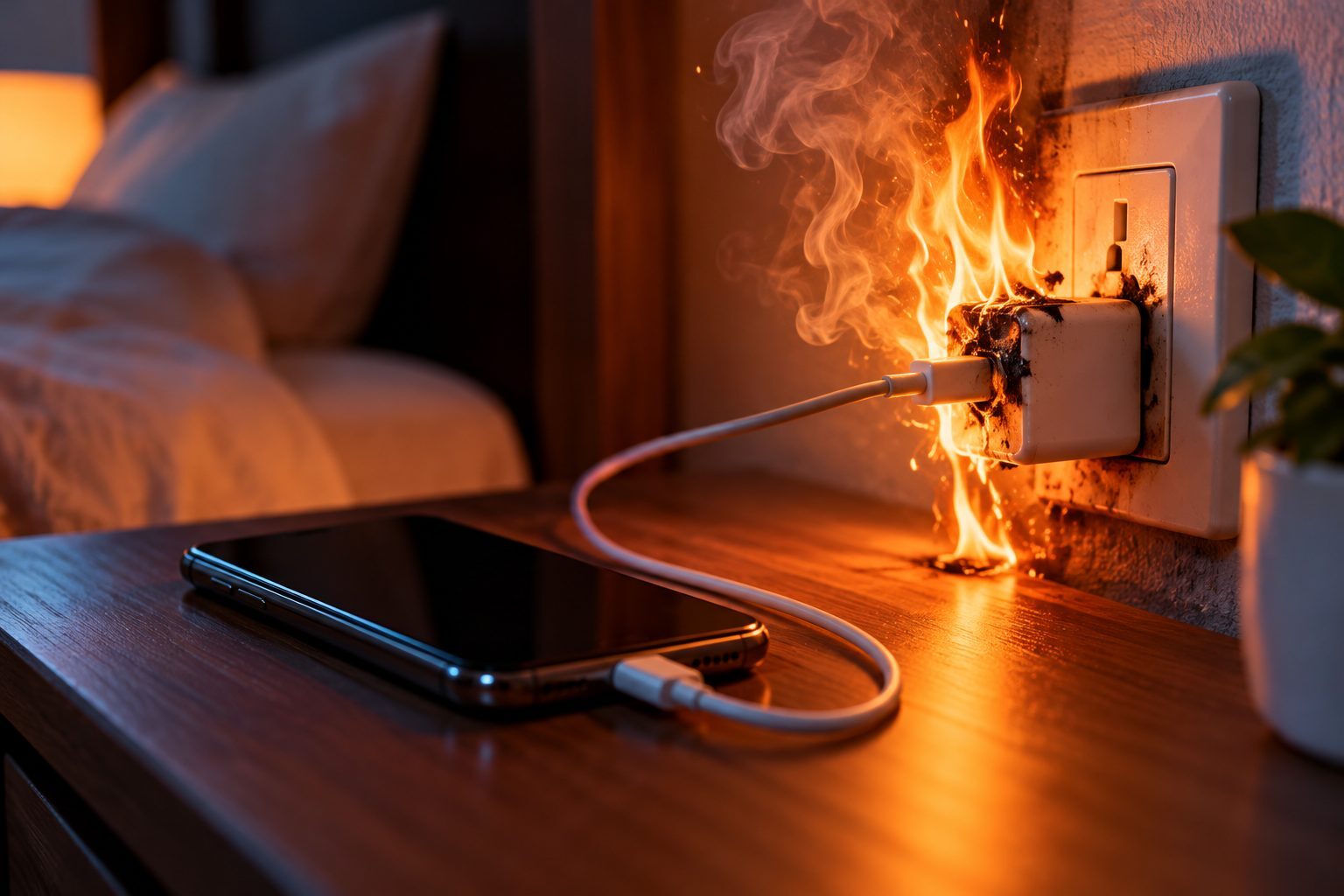
Take a quick look around your house. How many things are plugged in or charging right now?
Your phone. A laptop. Tablet. Smartwatch. Portable charger. Cordless drill. Vacuum. Maybe an e-bike or scooter.
We rely on rechargeable devices every day, and many of them use lithium-ion batteries. Most of the time, we don’t give those batteries a second thought. We plug them in, walk away and expect them to be ready when we need them.
But what happens when something goes wrong?
When a Battery Becomes a Fire Risk
Lithium-ion batteries pack a lot of energy into a relatively small space. If a battery is damaged, defective, overheated or improperly charged, it can potentially catch fire.
That’s why it’s important to pay attention to the devices you’re charging around your home.
Warning signs can include:
-
A battery or device that becomes unusually hot
-
Swelling or a change in the battery’s shape
-
Strange noises such as popping or hissing
-
An unusual odor
-
Leaking
-
Smoke
If something doesn’t look, smell or feel right, don’t ignore it.
Where Are You Charging Your Devices?
Where you charge can matter, too. Charging a phone, laptop or other device on a bed, couch, pillow or other soft surface can trap heat. Whenever possible, charge devices on a hard, stable surface and follow the manufacturer’s instructions.
Larger battery-powered devices, including e-bikes and scooters, deserve additional attention. Avoid charging them in a location that could block an exit if a fire occurs.
And don’t forget about the charger itself. Use charging equipment that’s appropriate for the device and be cautious with damaged cords, questionable replacement batteries or incompatible chargers.
Could a Charger Fire Be Covered by Homeowners Insurance?
Now for the insurance question. What happens if your phone, laptop, battery charger or another rechargeable device causes a fire that damages your home? A homeowners insurance policy may provide coverage for resulting fire and smoke damage when the loss is caused by a covered event. Depending on the circumstances and your individual policy, coverage could potentially apply to the home itself as well as damaged personal belongings.
Renters insurance may also provide coverage for a renter’s personal property after a covered fire. However, insurance policies aren’t all identical. Coverage, limits, deductibles and exclusions can vary, which is why it’s important to talk with your insurance agent about your specific policy.
Don’t Forget About Your Belongings
Here’s another reason this topic is worth thinking about. If a fire damaged one room in your home today, could you remember everything that was in it?
Your television. Furniture. Computer. Clothing. Electronics. Decorations. Collectibles. Appliances. It can add up quickly.
Consider creating a simple home inventory by walking through your house and taking photos or video of your belongings. Keep that inventory somewhere you can access it even if your phone or computer is damaged.
Your October Challenge: Count Your Chargers
Here’s an easy challenge for tonight: Walk through your house and count how many things are currently plugged in or charging.
You might be surprised. While you’re at it, look at the cords, chargers and batteries. Are any damaged? Are devices charging on beds or couches? Do you have old chargers plugged in that you don’t even use anymore?
A few minutes of checking could help reduce a potential fire risk.
Technology Changes. Your Insurance Should Keep Up.
Our homes contain more electronics, rechargeable devices and technology than ever before.
That’s one reason it’s a good idea to review your homeowners or renters insurance periodically. Your independent insurance agent can help you understand what your current policy covers, answer questions about fire and personal property coverage, and identify areas that may be worth reviewing.
Because sometimes one little charger can create a much bigger problem.
Recent Comments